When I first started teaching, I was always the teacher leaving school last. I would see other teachers, especially one amazing teacher who would walk out right after dismissal, and I would think, how in the world is she leaving at contract time?
Today I’m going to give you five tips to help you leave at contract time and be one of those teachers.
Prefer to watch instead of read? You can watch the full video here.
Table of Contents
Why Leaving at Contract Time Feels Impossible
Have you ever had an appointment at 4:00 and you knew you had to get out the door, and somehow everything got done and you made it on time? That’s because throughout the day, you made sure your to-do list and tasks were prepared so you could leave on time.
Getting everything done and leaving on time doesn’t happen by accident—it happens when your day is set up for it.
Most teachers aren’t staying late because they want to. They’re staying late because planning, grading, emails, prep, and classroom setup spill into after-school hours.
Without structure, everything pushes into the end of the day. And most teachers feel like they can’t leave until they get everything to a point that feels manageable for the next day.
Tip #1 — Create a Schedule and Stick to It
To leave at contract time, you need to create a schedule and actually stick to it.
One of the biggest challenges is limiting interactions with other people. Planning time disappears fast when you’re social, talking to teammates, stopping in other classrooms, or scrolling social media.
If you want to leave at contract time, planning time has to be used for – you guessed it! – planning.
Steal my Sample Weekly Planning Structure
(This works best in situations where you actually get your planning period at least four out of five days a week.)
Monday
I like to use Mondays to meet with my team and plan for the next week (or ideally, we would be a couple of weeks ahead).
After we plan the overview, we send materials to the copy center.
Then I tie up loose ends from the previous week.
If you don’t have team meetings, collaborating with your teammates will still help cut down on how much planning you have to do.
For example:
- One person plans reading
- One person plans math
- Share resources
Tuesday
I go back and fill in the missing parts of the plans that we worked on Monday.
Then I pull books and crafts for the next week or two.
Finish copy center forms and send them out.
Wednesday
Wrap up planning.
Flex day for PLCs or meetings.
Finish anything you didn’t complete earlier in the week.
Thursday
Pull materials for the next week.
Organize the weekly materials.
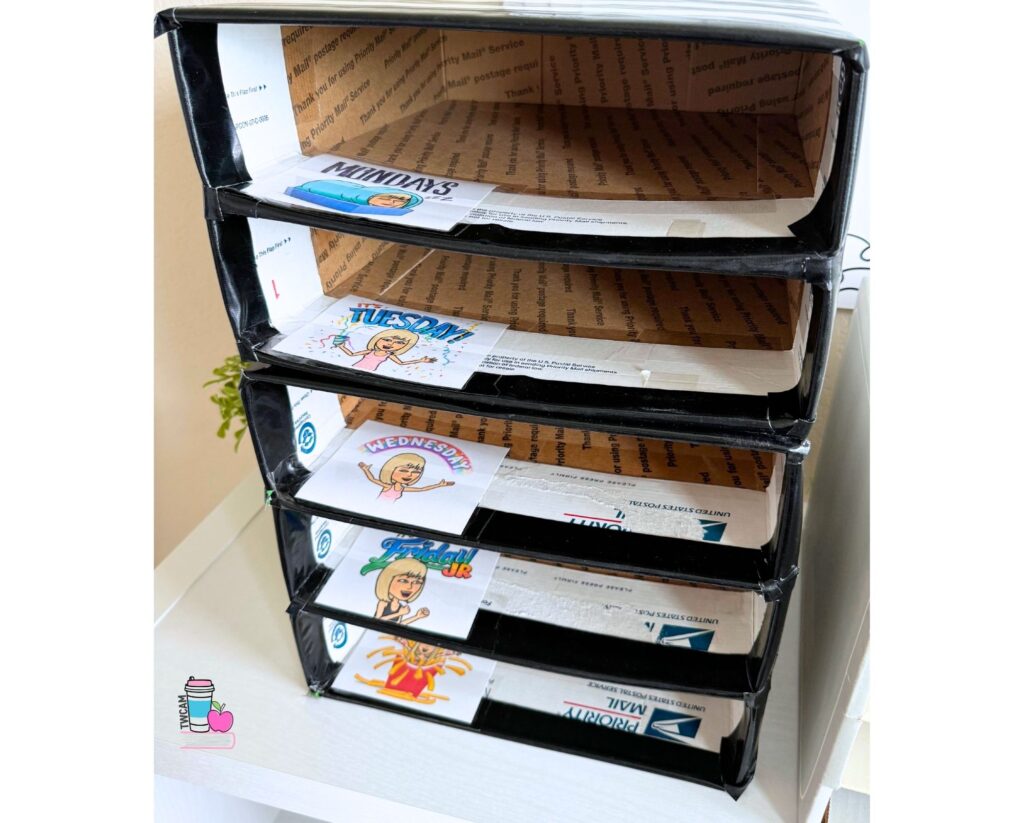
Use weekly boxes or drawers labeled by day.
This becomes your setup system for the following week.
Friday
Make adjustments to plans. Life happens: a fire alarm or a random assembly, and sometimes we have to move a couple of things around.
Make sure Monday is 100% ready to go.
Everything for Monday is pulled, laid out, and prepared. 👏🏼
Tip #2 — Limit Distractions
Close Your Door
If you’re in deep planning mode, close your door and turn off your light. Most people won’t come in if the light is off because it looks like you aren’t in your room. I found that this is one of the biggest ways to leave at contract time.
Limit Email Checking
Check email at the beginning of the day and near the end of planning.
Don’t start planning by checking email. That leads to distractions and rabbit holes.
If something needs a response later, flag it and come back to it.
Set expectations with parents that unless it’s urgent, you’ll respond the next morning.
Managing Email Without Losing Time
Email can take over your planning time.
Using email templates helps save time and reduces the amount of energy spent writing emails from scratch.
Tip #3 — Split Up Your To-Do List
Your to-do list doesn’t need to be done all today. I’m guilty of this. I love to feel like I’m ahead by getting things checked off my to do list so that they are out of my brain and I don’t forget to do them. But I have to constantly remind myself that that isn’t the best use of time.
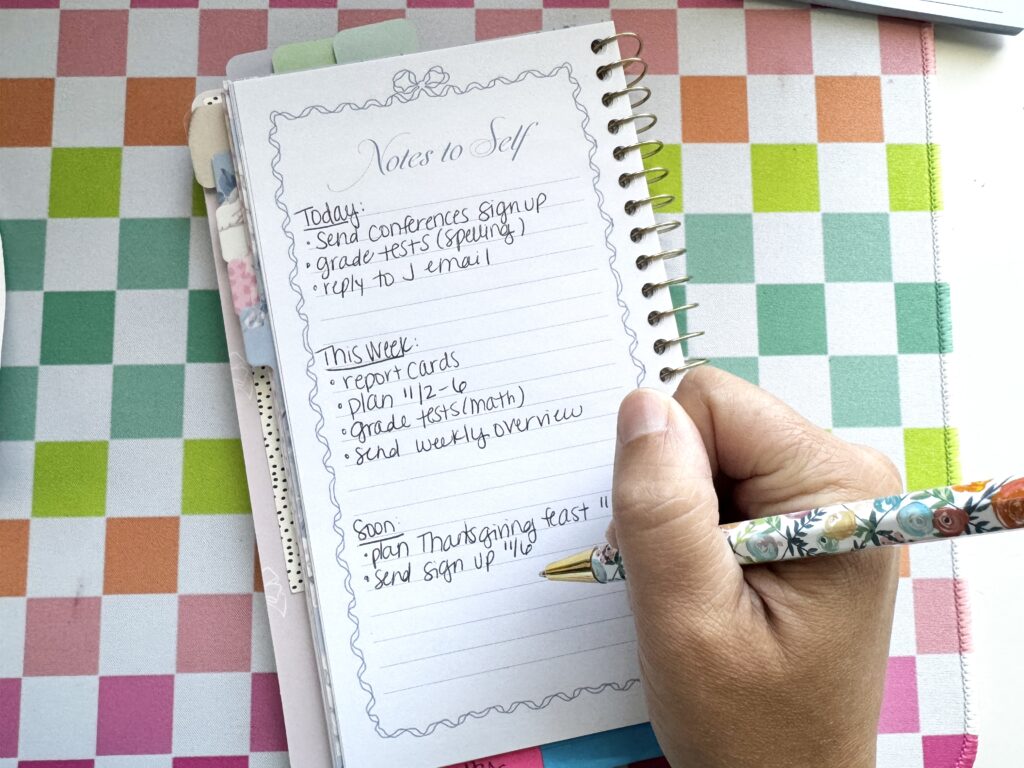
Split your to-do list into:
- Today
- Tomorrow/this week
- Soon
Put due dates on your “soon” list.
Not everything needs to be done immediately. Some things can wait, even if they feel urgent.
Use Due Dates to Reduce Overwhelm
When tasks are organized by due date, you stop working out of order.
This prevents the cycle of doing things weeks early and then scrambling when real deadlines arrive for things that you’ve put off like grading papers and report cards.
Tip #4 — Plan Tomorrow Today
Before leaving for the day, create your “today” to do list for tomorrow.
List your top three priorities:
- Grading
- Emails
- Planning tasks
When you arrive the next day, your to do list for that day is already made. This helps ensure that you get the most important things done and that you don’t have to stay to do them.
Tip #5 — Let Students Help Reset the Classroom
Students should help reset the classroom.
Some things I like to have students help me with:
- Pack up
- Change the date
- Switch classroom materials
- Reset areas
- Prepare spaces for the next day
Students love helping, and it builds responsibility.
This can happen during the last 10 minutes of the day while you’re monitoring dismissal and preparing to leave.
Final Thoughts on Leaving at Contract Time
Leaving at contract time isn’t about working harder. It’s about structure, systems, and planning with intention.
When you:
- Use your planning time intentionally
- Follow a weekly structure
- Limit distractions
- Manage email efficiently
- Organize your to-do list
- Plan ahead
- Let students help reset
it allows you to not have to stay after school to do these things.
You deserve to leave at contract time without feeling like you have to stay late just to keep your classroom running. I hope these tips help you create a school day that runs more smoothly, so you can spend less time catching up at school and more time enjoying life at home. If you find that you are still staying late, take a look at what you’re staying late to do and try to find a time during the day to get it done.
Read Next
Looking for more ways to save time and make your classroom run smoothly? Check out these posts for practical tips to simplify your routines and spend less time managing the little things.
- 6 Steps to the Dismissal Routine of Your Dreams
- How to Create an Effective Transitions Anchor Chart (So You Stop Repeating Yourself)
- How to Use Transition Songs to Make Classroom Routines Smooth and Quiet
- Hand Signals for Classroom Management: My Favorite Tool to Stop Classroom Interruptions
Save These Tips for Leaving at Contract Time
Save this post so you can come back to these tips whenever you need them! Just pin it to one of your favorite teaching boards on Pinterest. That way it’s right there when you’re looking for simple, realistic ways to get everything done and actually leave at contract time—without the last-minute scramble or staying late.