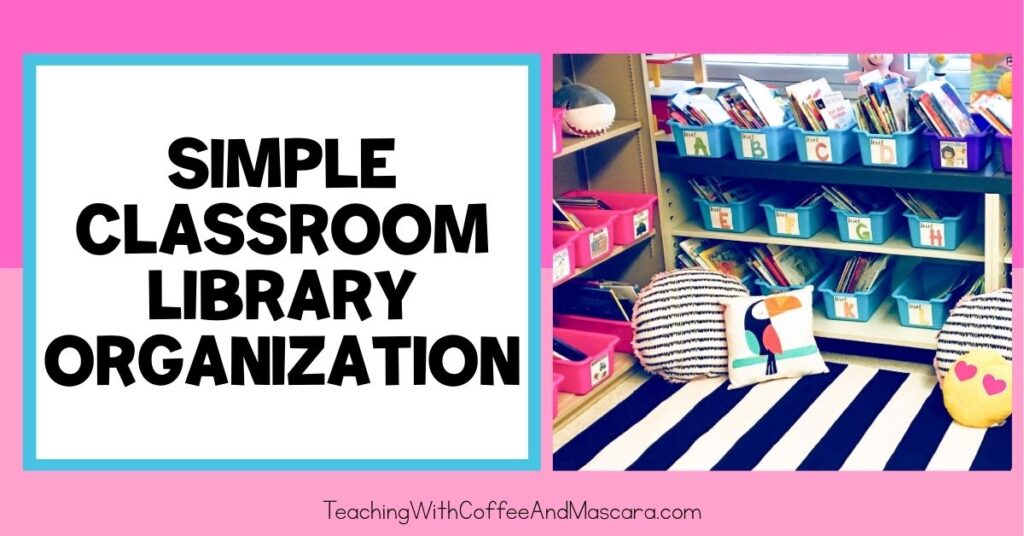
Today, we’re talking all about our classroom library organization so that your library actually stays neat and organized.
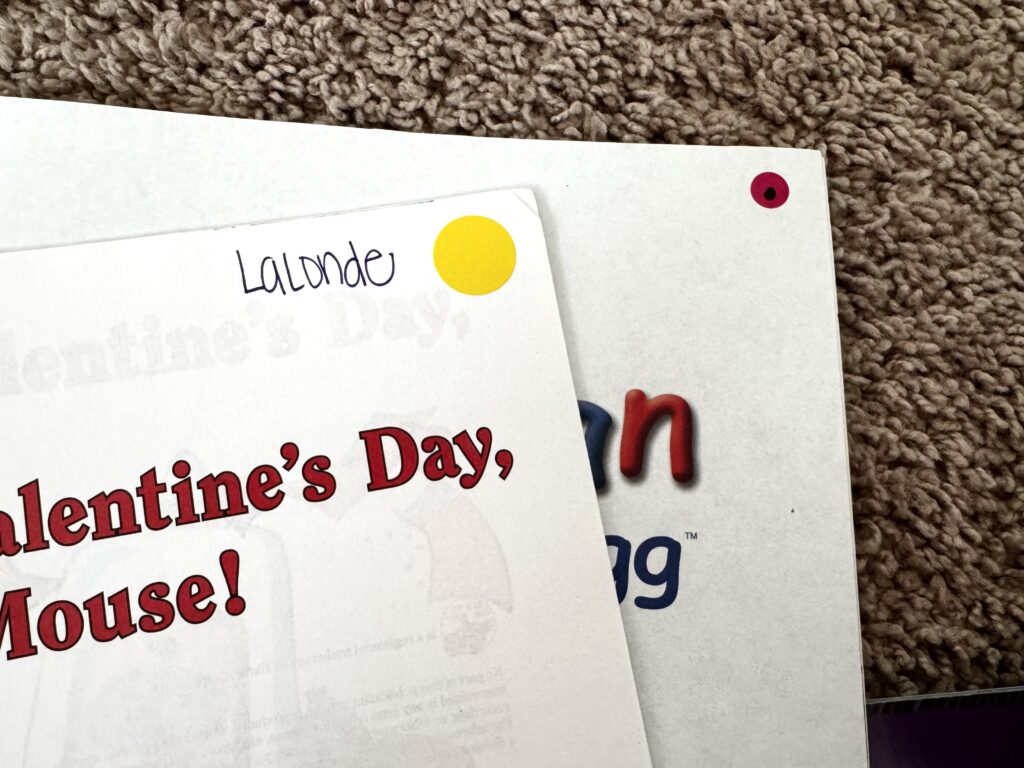
My first year teaching, I thought I had a solid system. Every book had a different colored dot. I felt organized. I felt confident. And every single time I looked over at my library, it was complete chaos. Books in the wrong bins. Nothing where it belonged.
I tried reteaching the system. I explained it again. And again. And again. And that’s when it finally clicked that the problem wasn’t my students. The system just wasn’t working.
Prefer to watch instead of read? You can watch the full video here.
Table of Contents
Why My First Library System Failed
I labeled every book with a different color dot and truly thought my students would understand it. They didn’t. No matter how many times I explained it, the books were constantly ending up in the wrong bins.
That was my sign that I needed a better system.
The Simple Change That Fixed Everything
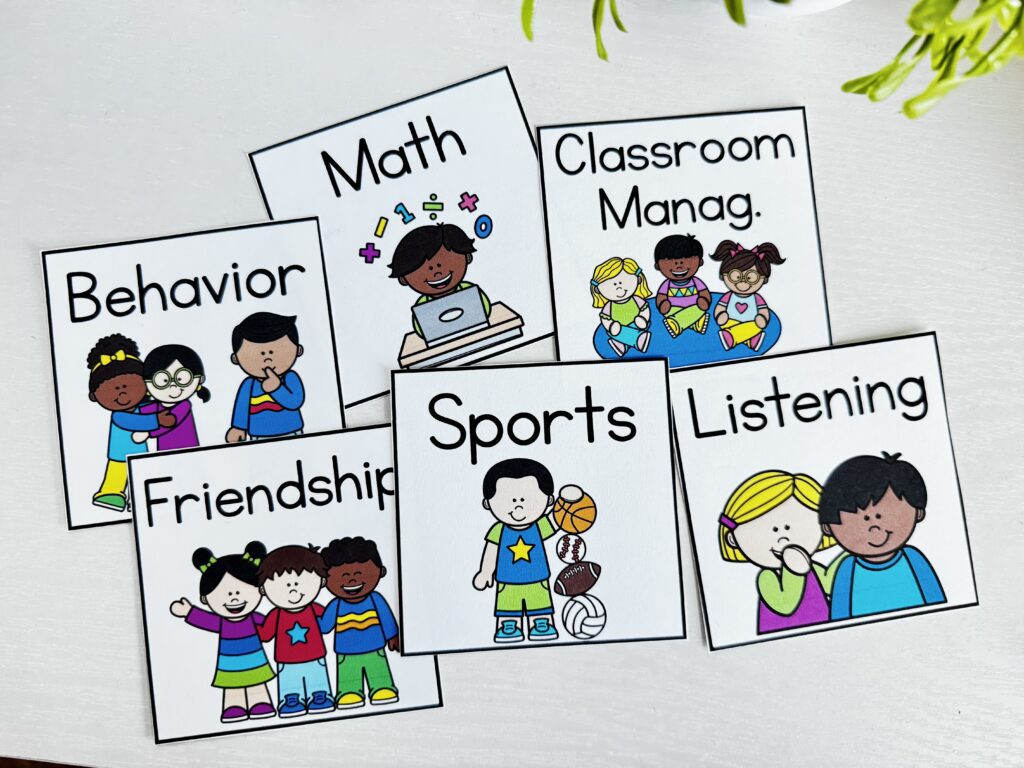
The next year, I switched to labels with pictures and words. For example, a soccer ball next to the word “sports.” I put the same label on the back of the book and on the front of the bin.
And it worked. Instantly.
My books stayed organized. They were always in the right bin. And my kindergarten students actually understood the system.
Step 1: Sort Your Books Into Kid-Friendly Categories
The first thing you’ll want to do is take your pile of books and sort them. This part does take time upfront, but it is worth it.
Think broad, kid-friendly categories like sports, superheroes, or holidays. Don’t overthink it. Keep it simple. You can always adjust categories later if you need to.
Step 2: Create Picture-and-Word Labels
What to Include on Your Labels
What really helped my students was having both a picture and words they could match. Canva or PowerPoint works great for creating labels. You can create small squares, add clip art or images, and choose one easy-to-read font.
Stick to visuals that students can recognize at a quick glance.
How I Printed and Attached My Labels
To make it easy, I printed my labels on Avery labels that were two to a sheet, then cut them in half. That way, I could stick one label on the back of the book and one on the bin.
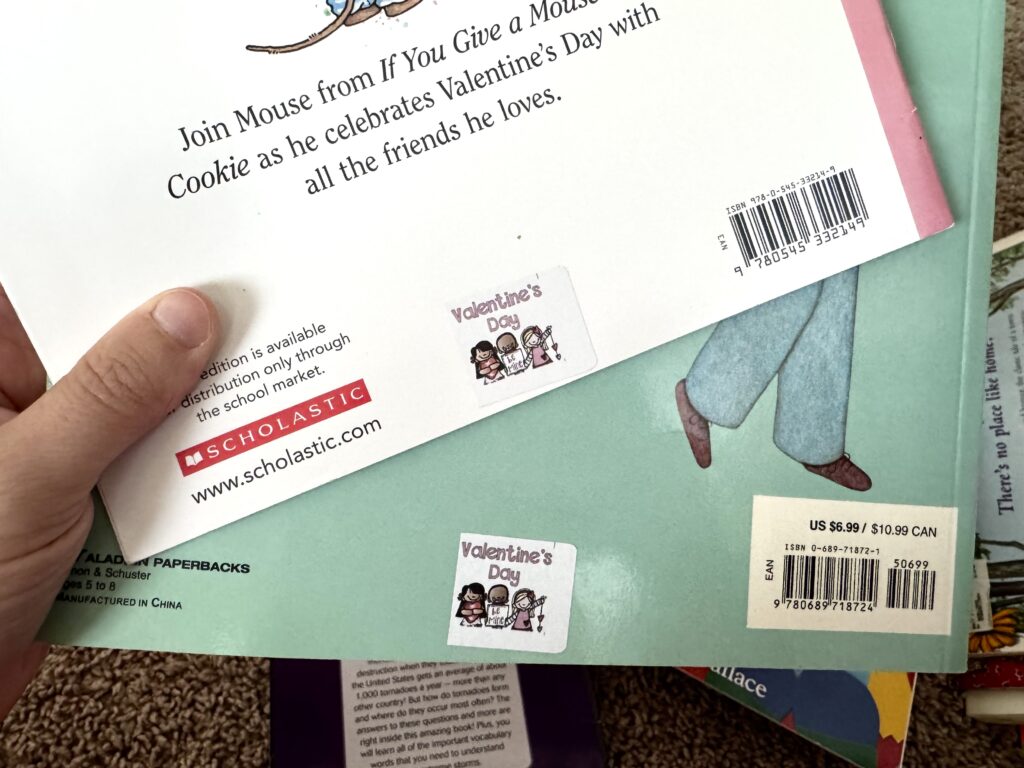
Another option is printing, and cutting out the labels then taping them on, but I’ve found the Avery labels last longer. Mine have been on my books for years without peeling.
To keep everything looking clean and cohesive, I recommend using images from the same clip artist or real photos, and sticking with one font throughout.
Keeping Your Library Organized Past October
Once everything is labeled, organizing new books is easy. Just add a label and place the book in the matching bin. I store extra labels in an envelope or folder so they’re ready whenever I get new books.
Switching to picture-and-word labels is one of the best things I ever did for my classroom library. It makes sense for little learners, keeps everything neat, and saves me time after that initial setup.
No more spending planning periods resorting books.
Final Thoughts On Library Organization
At the end of the day, classroom library organization isn’t about color-coding perfection or the prettiest bins. It’s about creating a system your students can actually understand.
Once I switched to picture-and-word labels, everything changed. My students could independently return books. I wasn’t constantly reteaching the system. And my library stayed organized because it finally made sense to them.
If your current system isn’t sticking, it’s not because your students don’t care. It might just need to be simpler.
Start with broad categories. Add clear picture-and-word labels. Keep it consistent. And set it up in a way that works for little learners.
An organized classroom library doesn’t have to mean constant maintenance. With the right system, it can stay that way.
If you’re looking for more ways to build your classroom library without spending a fortune, you’ll want to read my post where I share five inexpensive ways to get more books into your students’ hands.
Because an organized library is great. A full one is even better.
Save These Classroom Library Organization Tips
Save this post so you can come back to these classroom library organization tips whenever your bins start looking a little wild. Just pin it to one of your favorite teaching boards on Pinterest. That way, when it’s time to reset, relabel, or simplify your system, the ideas are right there to help you keep your library neat, functional, and easy for students to manage independently.