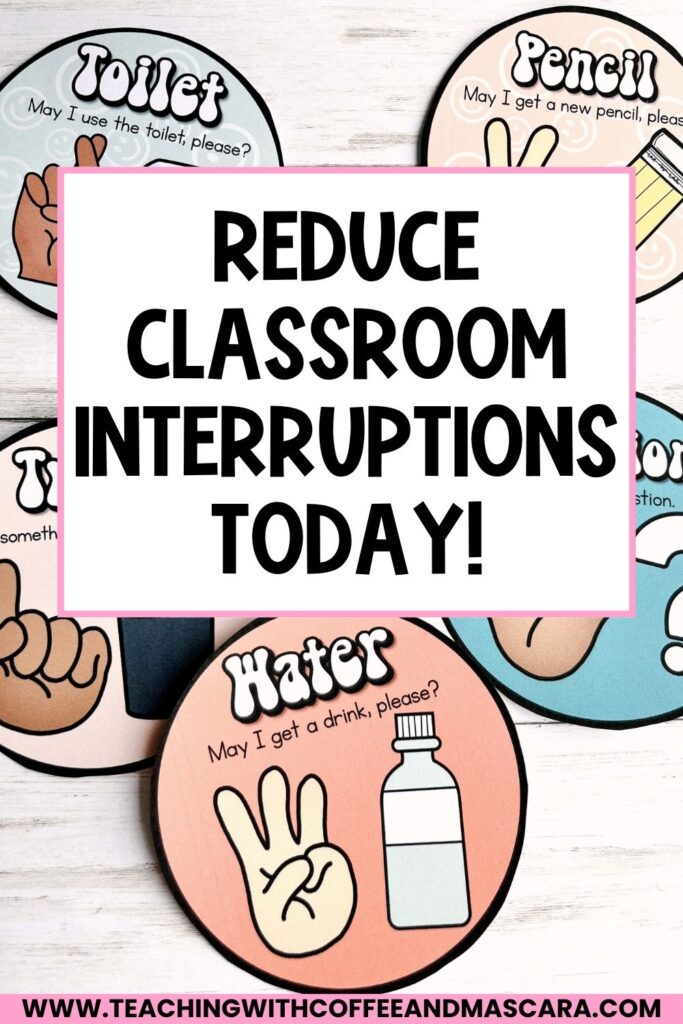
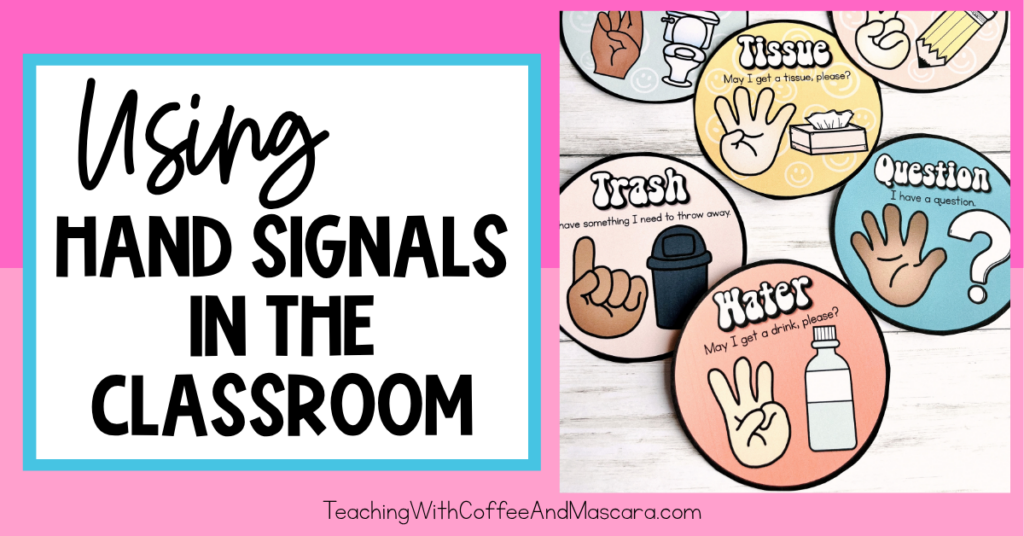
Interruptions. The bane of every teacher’s existence. Students constantly raising their hands in the middle of your well-thought-out lessons, off-topic questions, and interruption after interruption.
Today I’m going to share my personal favorite classroom management tool to help reduce this constant stream of interruptions, all while saving your voice. That’s right, it’s hand signals for classroom management. And you won’t even have to say a word using this tool.
If that sounds like something you’d love to have in your classroom, then let’s get to it.
Prefer to watch instead of read? You can watch the full video here.
Table of Contents
Why Interruptions Are a Classroom Problem
When students raise their hands, you never really know what you’re going to get.

They might have a question.
They might need the bathroom.
Their nose might be bleeding.
They might want to tell you a story about their dog chasing a squirrel.
You don’t know what they need, and every interruption breaks your teaching flow.
My Favorite Tool to Reduce Interruptions
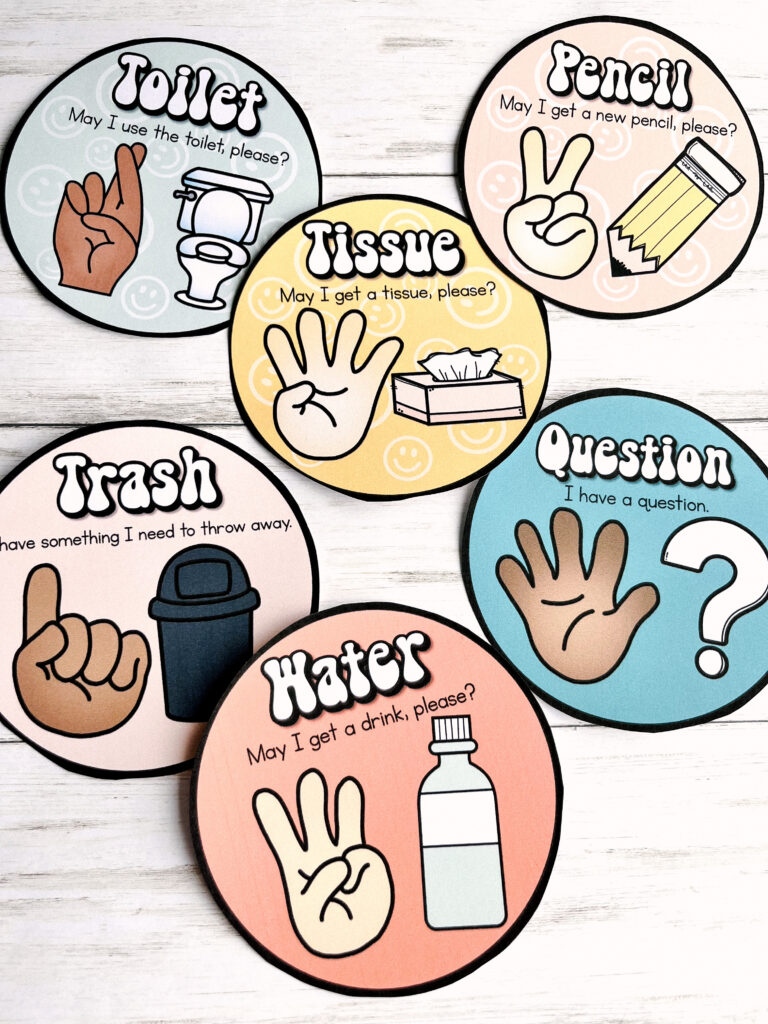
My favorite hand signals for classroom management are nonverbal hand signals.
What Are Nonverbal Hand Signals?
A nonverbal hand signal is a hand signal where students are using their hand to tell what you what they need.
Instead of speaking, students use a signal to communicate with you.
For example:
If students need a tissue, they hold up the number four.
If they need a drink of water, they hold up a W with their fingers.
If they need the restroom, they use the restroom signal.

Why This Works
With raised hands, you don’t know what students need. With hand signals, you know exactly what they’re asking for because they’re showing you with their fingers.
Why Hand Signals Make Teaching Easier
What I love is how easy it is to respond.
You make eye contact with the student.
You see the signal.
You simply nod or shake your head no.
All without missing a beat in your teaching.
You can keep talking, keep teaching, and keep the lesson flowing while still meeting student needs.
How to Teach Nonverbal Hand Signals
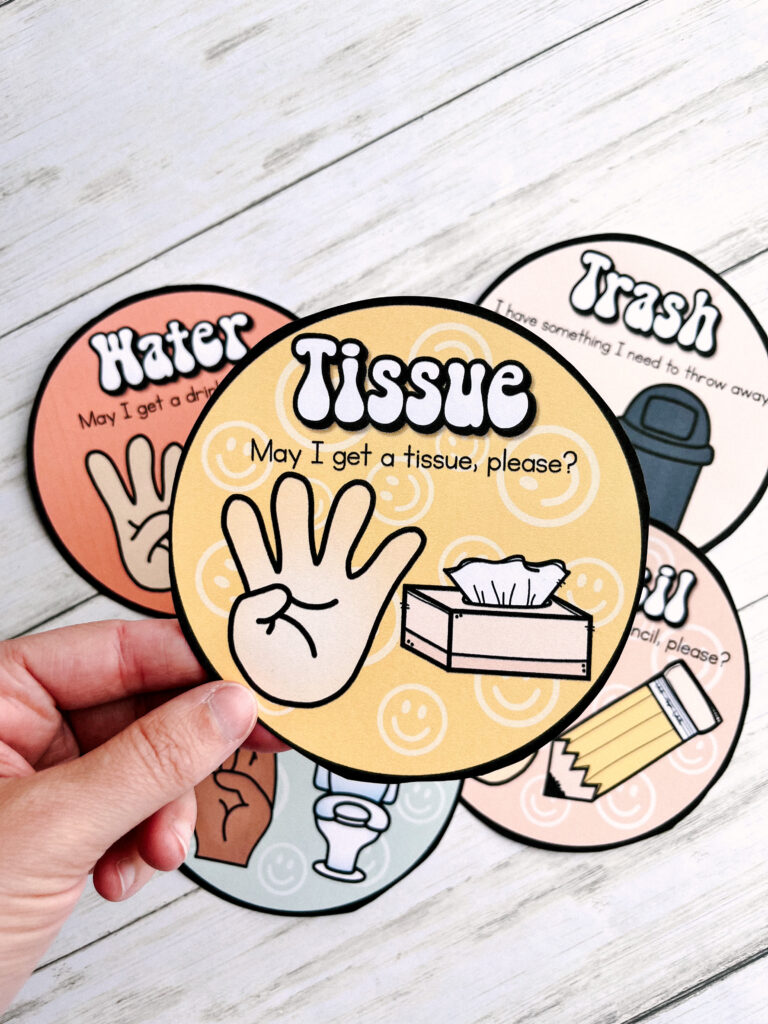
I like to use visuals that show:
- A photo
- The question being asked
- The hand signal number
For example:
“May I get a tissue, please?”
It shows a tissue box and the number four.
This was especially helpful in my kindergarten classrooms with English language learners. Students could reference the photo and the number and understand exactly what to do.
Practicing the System with Students
Teaching is about explicitly teaching and practicing.
I model it with students:
“I’m thirsty. I want a drink of water. What sign do I hold up?”
At the beginning of the year, students will still raise their hands and ask out loud.
When they do, I don’t say yes right away.
I say, “What sign is that?”
We reference the signs.
We find the correct signal.
They make the signal.
Then I say yes.
At first, it takes practice. But after about the first week, students know where to look and what signals to use.
Why Hand Signals For Classroom Management Work So Well
Hand Signals:
- Save time
- Reduce interruptions
- Minimize distractions
- Keep lessons flowing
- Support classroom routines
- Help students communicate clearly
- Support English language learners
- Reduce teacher voice strain
It makes teaching easier and classroom management smoother.
Final Thoughts on Using Hand Signals for Classroom Management
Nonverbal hand signals reduce interruptions, save time, and protect your teaching flow. Instead of constant disruptions and off-topic questions, students communicate their needs clearly and quietly.
You don’t have to stop teaching.
You don’t have to raise your voice.
You don’t have to interrupt your lesson.
You simply see the signal and respond.
If you need nonverbal hand signals for your classroom, try these sets! The sets that are featured are the Boho colors.
For more classroom management tools, check out these posts:
- Noise Letters: My Favorite Tool to Quiet a Noisy Classroom
- How to Use Picture Books to Teach Voice Levels and Quiet a Noisy Classroom
Save These Nonverbal Handsignals Posters for Later
Save this post so you can come back to how to teach hand signals whenever you need them! Just pin it to one of your favorite teaching boards on Pinterest. That way it’s right there when you’re looking for a simple, effective way to help your students to ask for what they need without using their voice!