
Your reading groups are supposed to be rotating, but instead two students are still playing the game, one student is drawing a picture, another is singing, and only half the class is standing behind their chairs ready to move.
If that scene feels familiar, you’re not alone.
Smooth classroom transitions don’t happen by accident. They aren’t about luck or having a “good class.” Calm, organized transitions come down to one simple, powerful process that works when it’s taught and practiced consistently.
The key is four words: teach, practice, praise, practice. Here’s how to make them work in your classroom.
Prefer to watch instead of read? You can watch the full video here.
Table of Contents
Why Do Classroom Transitions Feel Chaotic?
One of the biggest reasons students get off task during transitions is simple. They either haven’t been taught clear expectations, or they can’t remember what they are supposed to do.
When students aren’t sure what to do next, confusion takes over. That’s when transitions feel stressful instead of smooth.
What four words could change everything in your classroom?
Smooth transitions come from repeating the same process over and over until it becomes second nature.
The four words that could change your classroom are:
- Teach
- Practice
- Praise
- Practice
Each step builds on the one before it.
1. Teach the Routine
Teaching starts with showing students exactly what the transition looks like. For example, during reading group rotations, I model every step. I show myself getting up, hitting the music, cleaning up, standing behind my chair, and waiting for the teacher’s cue to rotate.
Students need to see what success looks like before they can do it themselves.
Using Anchor Charts as a Reference Tool
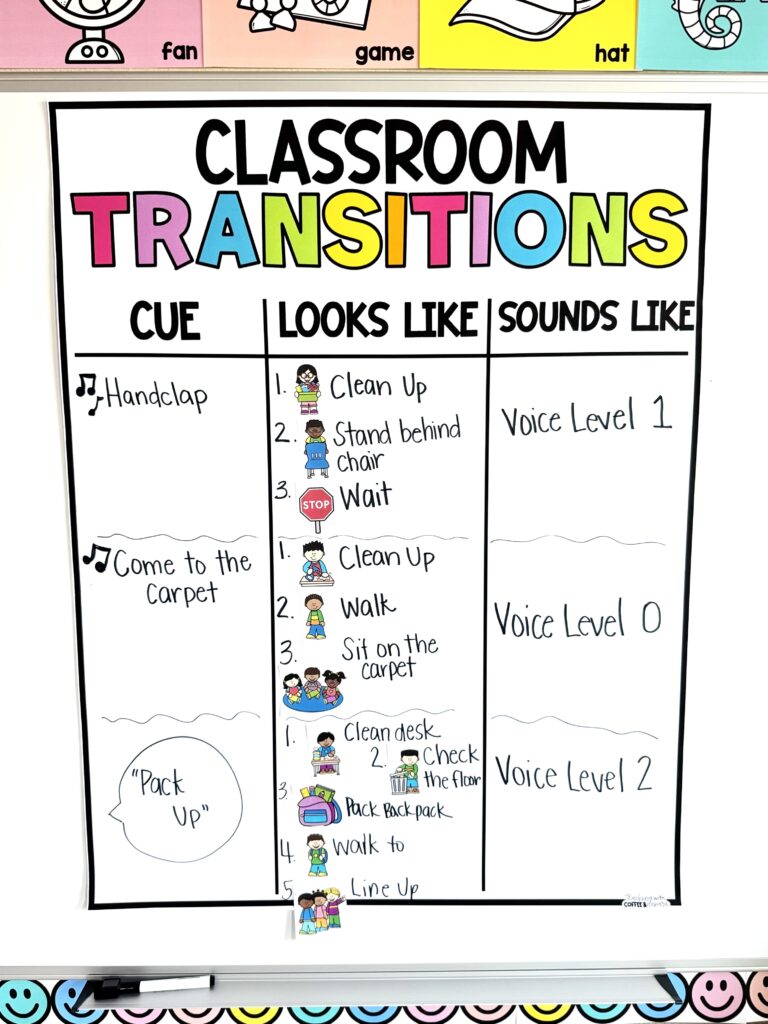
An anchor chart makes expectations clear and visible. I keep it in the same spot in the classroom so students always know where to look if they forget the next step.
My goal is for students to use their own brain, not mine. They shouldn’t rely on me telling them what to do next. They should know where to look for the answer.
2. Practice Until It Becomes Automatic
Teaching the routine once isn’t enough. Routines only work when they’re practiced until they become muscle memory.
Think about learning to drive. At first, every step takes effort. Over time, it becomes automatic. That’s exactly what we want for transitions.
Scheduling Practice on Purpose
I like to schedule practice sessions, especially after recess when students have high energy but we’re not in a rush. We treat it like the real thing. I give them time at the center, play the cue, and walk through each step using the anchor chart.
Practice isn’t about perfection. It’s about building automatic habits so students don’t need reminders.
Keeping Students on Pace With Visual Timers
Some students struggle with understanding time. Twelve minutes and two minutes can feel exactly the same, which leads to slow starts, rushing, or skipping steps.
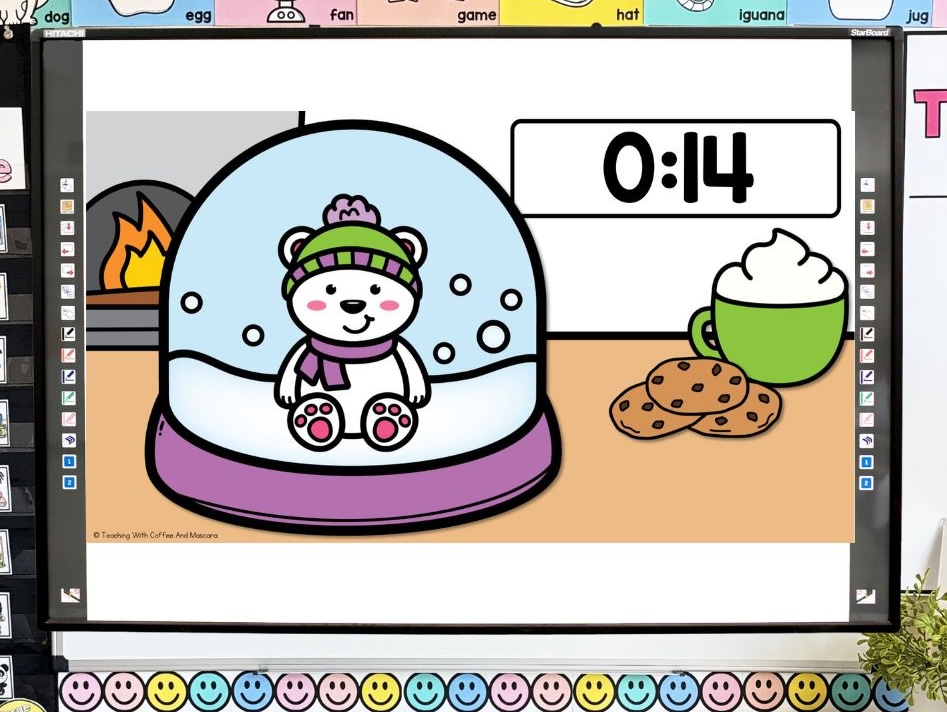
A visual timer keeps the whole class on pace without constant reminders. The simple, repetitive visuals keep students focused without being distracting. Because the countdown is visible, it creates urgency without stress.
3. Praise What You Want to See
Positive reinforcement makes a huge difference. When students hear exactly what they’re doing well, they feel successful and motivated to keep trying.
Instead of a general “good job,” I’m specific. I say things like, “I love how you stood behind your chairs so quietly.” That reinforces the exact behavior I want to see again.
4. Practice Again
Sometimes transitions still fall apart, especially after long breaks. That’s when it’s time for the last step: practice, again.
Needing more practice doesn’t mean something went wrong. It just means the routine hasn’t fully become muscle memory yet.
Final Thoughts on Classroom Transition Procedures
Smooth transitions don’t come from reminders, constant prompting, or hoping students magically figure it out. They come from teaching clear routines, practicing them intentionally, praising what’s going well, and practicing again when needed.
When expectations are clear and routines are automatic, transitions stop being stressful and start running smoothly.
For more classroom transition ideas, check out these posts:
- How to Create an Effective Classroom Transitions Anchor Chart
- Why Visual Timers Help Young Students Manage Time
- How to Use Transition Songs to Improve Classroom Management
Save These Classroom Transition Tips
Save this post so you can come back to these transition ideas whenever you need them! Just pin it to one of your favorite teaching boards on Pinterest. That way it’s right there when you’re looking for simple, engaging ways to make your transitions smoother.