Imagine this. It’s transition time, and instead of moving quietly to the next task, the noise level in your classroom skyrockets. You’re saying things like, sit down, guys, we’re already behind schedule, don’t forget to clean up, and somehow that only makes it worse.
You’ve tried clapping rhythms, counting down, and giving verbal reminders, but nothing seems to work. At this point, you kind of want to crawl back under the covers and pretend it’s Saturday.
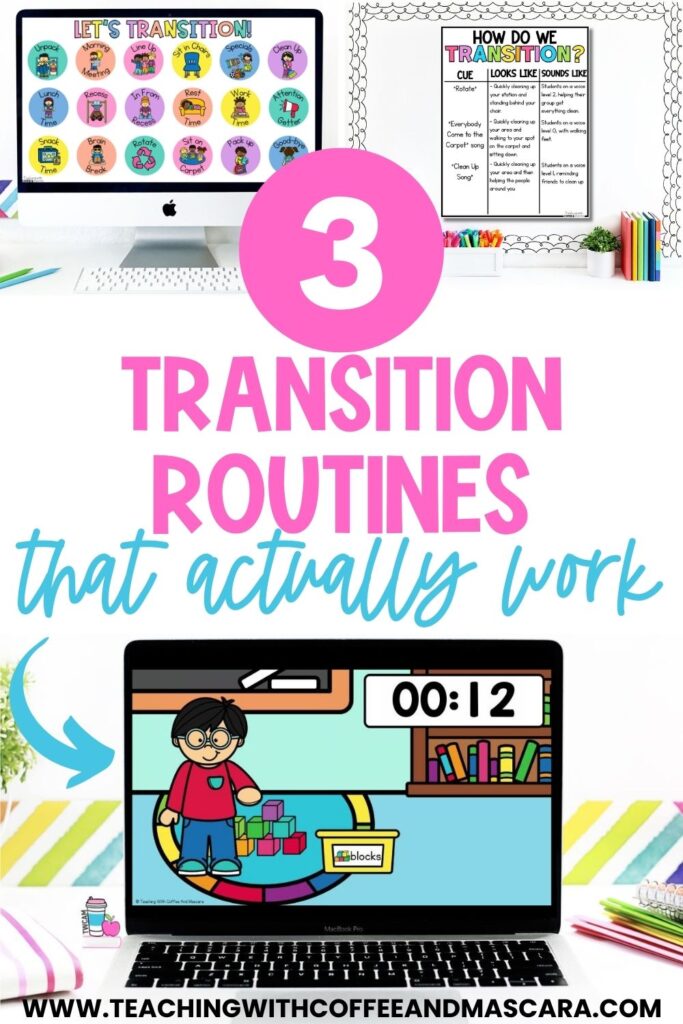
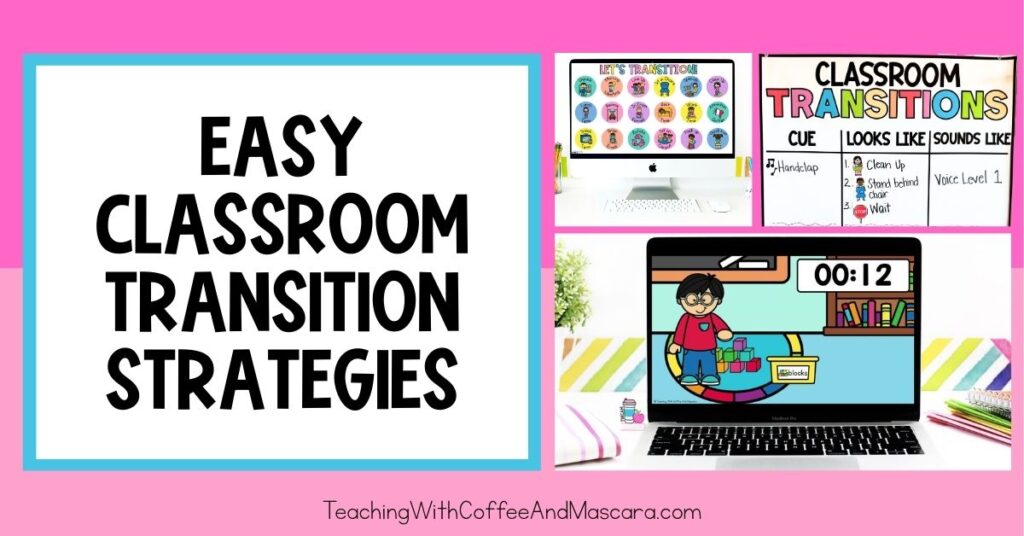
If all you want is for students to listen during transitions and do what they’re supposed to do, you’re not alone. That’s why today I’m sharing three simple ways to get your transitions running smoothly.
Prefer to watch instead of read? You can watch the full video here.
Table of Contents
Tool #1: Use a Clear Transition Cue
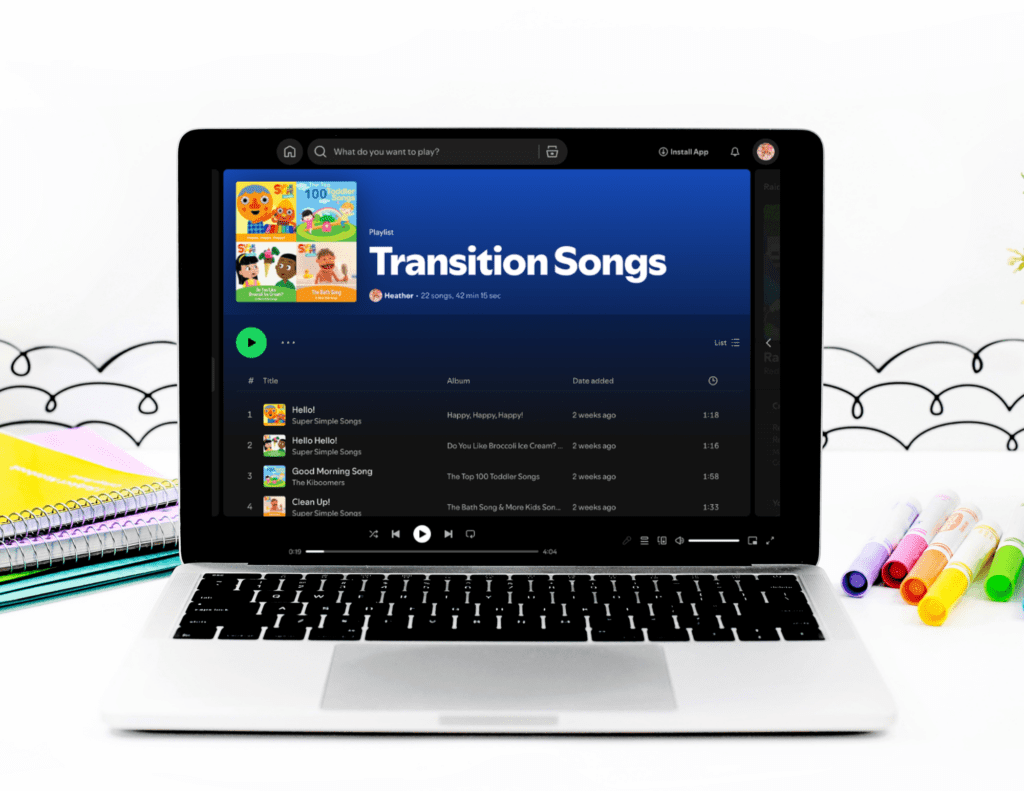
My favorite cue to use is music. Music is a powerful tool for signaling transitions because it’s consistent, non-verbal, and fun. When students hear the same song over and over for a specific transition, it creates predictability. They know exactly what to do without you having to remind them.
For example, using a two-minute cleanup song lets students know that when the song is over, they need to be done cleaning and back in their chairs, ready for the next activity.
Consistency Is the Key
The key is consistency. You want to use the same song every day for the same transition. This helps create a predictable routine so students know exactly what to do when they hear that cue and can follow along without constant reminders.
If you need ready-to-use transition songs, you can try this free transition playlist.
Tool #2: Use an Anchor Chart for Transitions
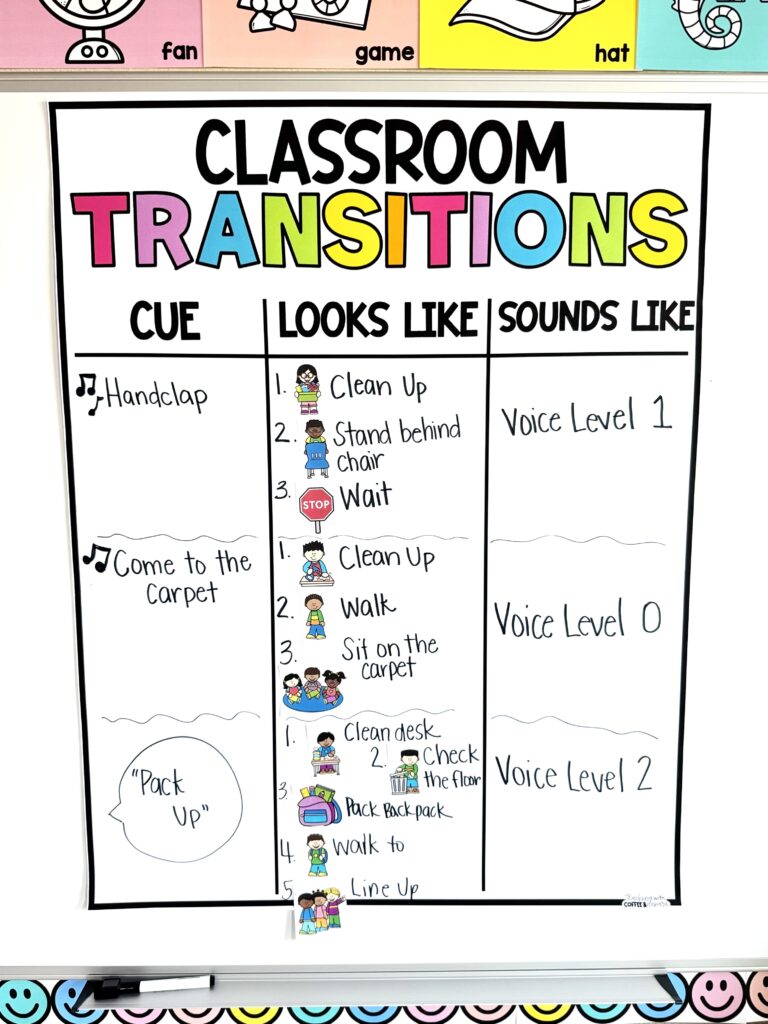
A lot of times, transitions feel chaotic because students don’t actually know what to do. The expectations aren’t clear. That’s where a transitions anchor chart comes in.
An anchor chart visually models the steps for students. It takes the guesswork out of what they should be doing and gives them a constant reminder they can reference if they forget what comes next.
How Do Anchor Charts Build Independence?
Having a clear anchor chart helps students become more independent during transition times. Instead of asking you what to do, they can look at the chart and keep moving.
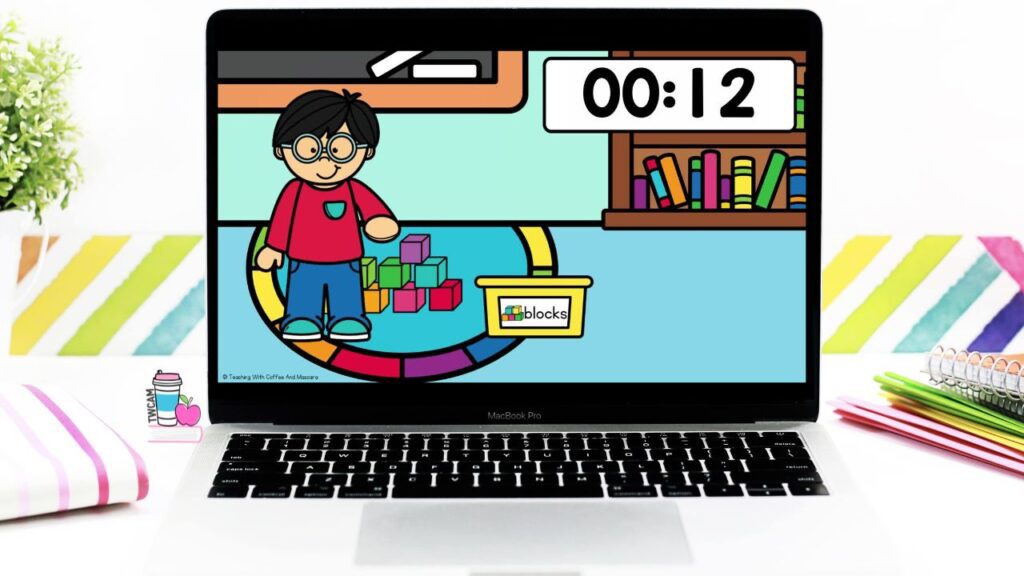
Tool #3: Use a Visual Timer
Why Does Time Feel Abstract to Kids?
Young students don’t always have a strong concept of time. It’s very abstract, which can lead to slow transitions or students rushing at the very end.
A visual timer allows them to see exactly how much time is left in a way they can understand.
How Do Visual Timers Support Pacing?
A simple visual timer helps keep students on task without being overly distracting. They can see the time going down and pace themselves accordingly.
I love using visual timers designed specifically for young learners. They’re calm, neutral, and not distracting.
Bringing It All Together
Using a cue, an anchor chart, and a visual timer creates a predictable and consistent routine. Students know exactly what to do and when to do it, which makes transitions smoother for everyone involved.
Final Thoughts on Classroom Transitions
These three simple tools can completely change how transitions feel in your classroom.
I’d love for you to try them out and come back to let me know which one works best for you.
For more classroom transition ideas, check out these posts:
- How to Create an Effective Classroom Transitions Anchor Chart
- Why Visual Timers Help Young Students Manage Time
- How to Use Transition Songs to Improve Classroom Management
Save These Classroom Transition Tips
Save this post so you can come back to these transition ideas whenever you need them! Just pin it to one of your favorite teaching boards on Pinterest. That way it’s right there when you’re looking for simple, engaging ways to make your transitions smoother.