If you love a noisy class that sings and taps and is constantly chatting, this post is NOT for you. But in all seriousness, do you ever feel like your class is constantly talking, tapping, singing, making noises all of the time, and it makes you want to pull your hair out?
If so, today you’re going to want to hear all about my favorite tool to get the noise under control in your classroom.
Prefer to watch instead of read? You can watch the full video here.
Table of Contents
Why Noise Control Starts with Voice Levels
The first thing you’ll want to start with is to teach your class something called voice levels.
When you think of voice levels, you think about how, when you’re outside, you have a different voice level than when you’re in a restaurant. Our kids are still learning that. They’re still learning where their voice level is supposed to be in different spaces and situations.
Sometimes in the classroom we need absolute silence because someone is taking a test. Other times we’re doing a fun experiment and it’s okay to have a louder voice.
That’s what we want to teach our students.
How to Teach Voice Levels the Right Way
We need to explicitly teach students what each voice level sounds like and feels like coming out of their mouth.
Practice Producing the Sound
Sometimes we talk about voice levels and what they mean, but we don’t practice them enough with students actually producing the sound.
That’s what you want to do.
You go through each voice level in your classroom and have students practice that voice level. I love to do this with books! These books are my favorite for teaching voice levels.
Example Practice Routine
You might say, “In your monster voice, everyone is going to tell me your favorite candy in a level one voice.”
They think of their favorite candy and tell it in a whisper.
If it doesn’t sound the way you want it to sound, you model it:
“That didn’t sound quite right. Here’s what my whisper sounds like. Now try again.”
Why Practicing Voice Levels Matters
When students practice voice levels, they understand what it means when you say, “We’re working at a level one today.”
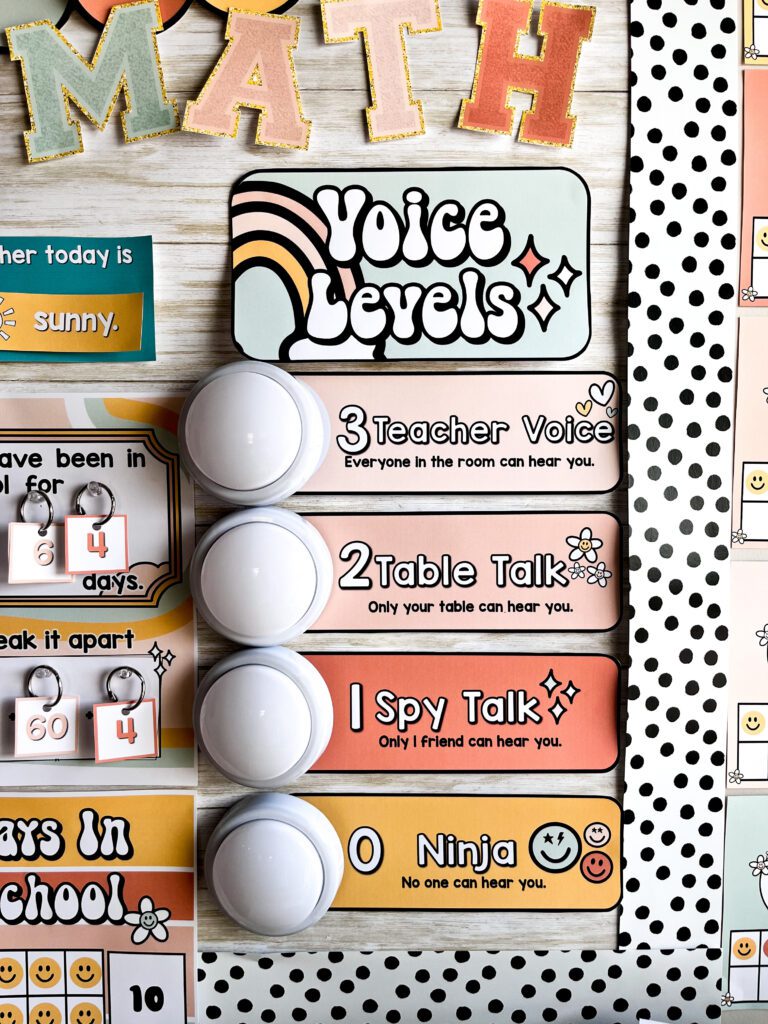
Especially in the beginning of the year, you should practice voice levels daily.
If students aren’t getting it, revisit it before activities.
This is the missing piece: explicitly teaching and practicing.
Practice. Practice. Practice.
What Are Noise Letters?
Once voice levels are taught and students still have a very chatty, noisy class, that’s where my favorite tool comes in: NOISE letters.
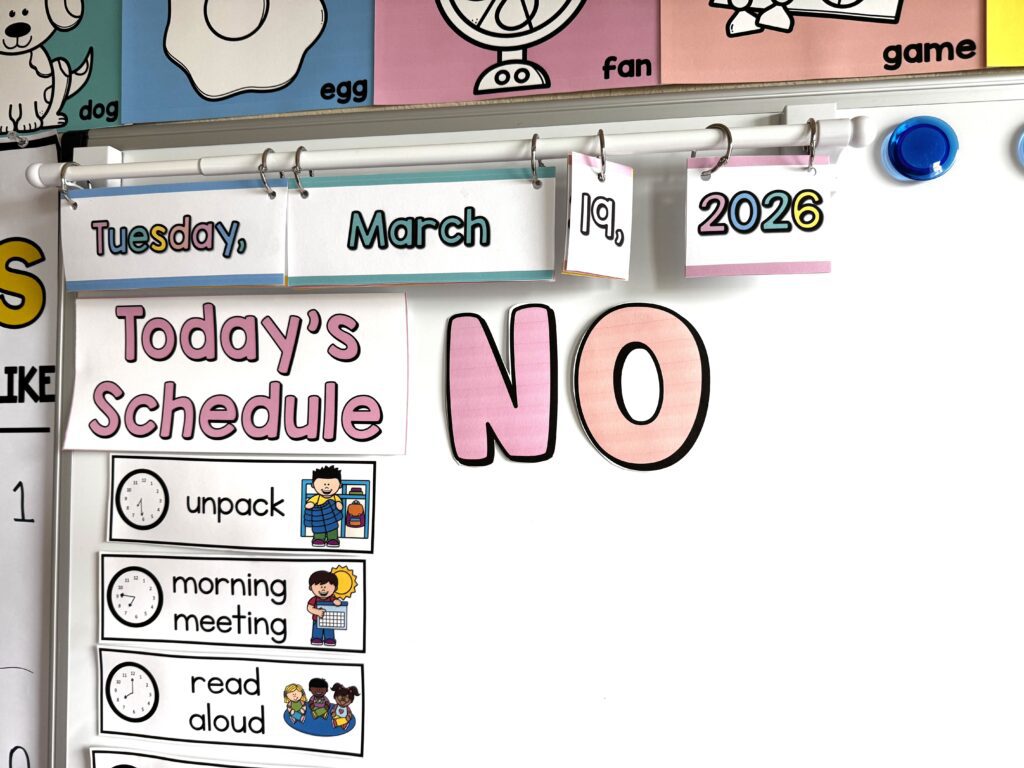
Noise letters are the word “NOISE” spelled out on your board.
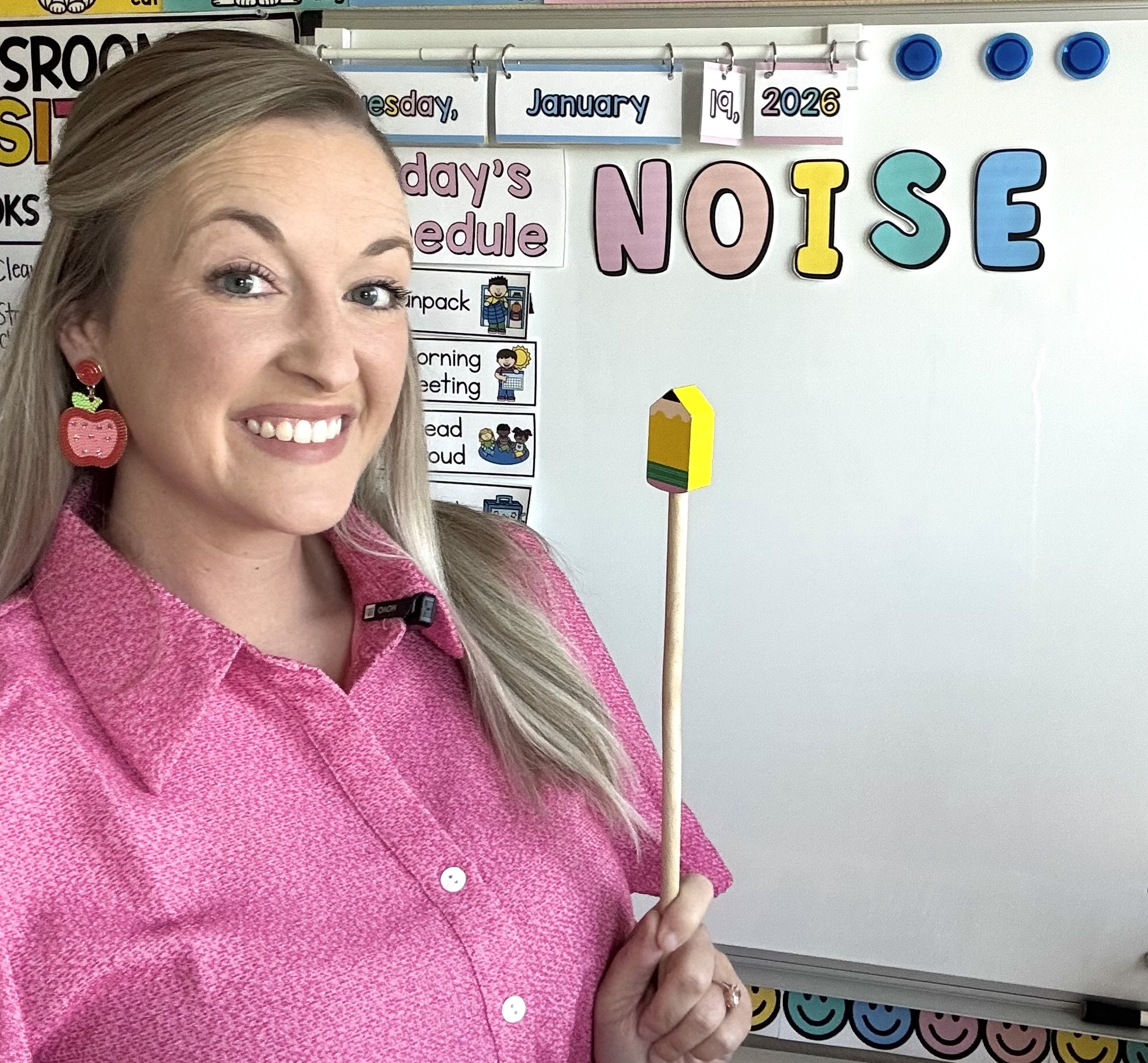
When students are too noisy, letters are slowly taken away.
How Do Noise Letters Work?
I personally work from the letter E down.
The reason is when I, S, and E are gone, you’re left with NO, which means no talking.
No talking. It ends perfectly.
Using Warnings and Practice with Noise Letters
If the class is too noisy, I say:
“This is sounding too noisy. I’m having a hard time working, and other friends are having a hard time working.”
Then I take down a letter.
That letter is a warning and a reminder:
- What voice level are we on?
- Practice it again
- Reset expectations
- Go back to work
No Talking Expectations
When the NOISE letters reach NO, that means no talking.
At the beginning of the year, no talking usually means no talking for one minute.
If the N is taken away, then it becomes a longer no-talking period.
Once all letters are gone, they lose a privilege. This usually happens near the end of the day and may mean no talking for the rest of the day.
Making Noise Letters Fun
As students get used to the system, you can change the letters to be seasonal or holiday themed.
It keeps it fun and keeps students engaged.
Rewards Without Physical Prizes
If students keep all their letters, they get something.
Not treasure box items.
Not physical prizes.
Classroom privileges.
Examples:
- Listening to music while working
- Watching an ambiance video while working
These are things students love and will work hard for.
Incentive-Free Alternatives
For teachers who want incentive-free ideas, another option is a classroom cheer.
If students keep all their letters, you do a class cheer at the end of the day: Talking about being a great class, learning together, and being on the correct voice levels.
This builds community without external rewards.
Final Thoughts on Using NOISE Letters for a Noisy Class
Noise control starts with explicitly teaching and practicing voice levels. But when that isn’t enough, noise letters become a powerful classroom management tool.
They create clear expectations, consistent consequences, and simple motivation that students understand.
They keep classrooms fun, structured, and calm without constant reminders, yelling, or frustration.
For more ways to quiet a class, check out these posts:
Save This Noise Letter Classroom Management Tip
Save this post so you can come back to this simple tool whenever your class gets a little too chatty. Just pin it to one of your favorite classroom management boards on Pinterest. That way it’s right there when you need an easy, visual way to reset voice levels without repeating yourself all day.